

The 1916 Easter Rising generated a generation of Irish leaders and statesmen but as a small island we have punched well above our weight providing statesmen for nations across the world. This series published everyday over the next two weeks looks at their stories.
Episode Three - New Zealand
Much has often been written about
the ancestral connections of US Presidents with Ireland but Irish citizens have
travelled the world becoming much loved and treasured statesmen in other
nations. Ireland
has produced three Irish born Prime Ministers of New Zealand. These are their
stories.
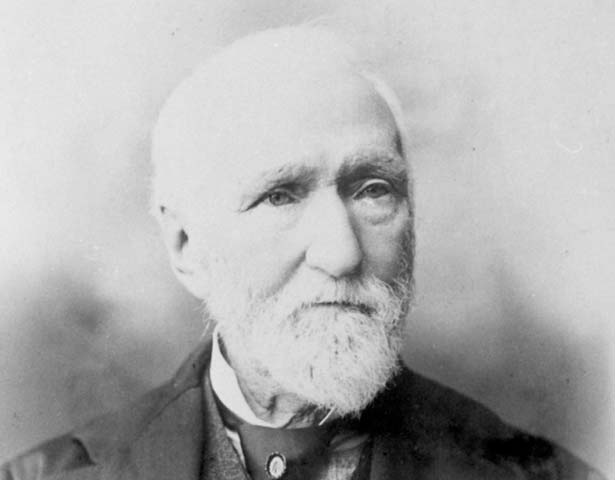
DANIEL POLLEN
On July 8th 1875 Daniel
Pollen became the Prime Minister of New Zealand. Daniel was the son of Hugh
Pollen, a dock master at the mouth of the newly opened Grand
Canal as it entered the River Liffey and Elizabeth O’Neill. Daniel
was born on June 2nd 1813 when the family lived in what later became
known as Pollen Cottage in Ringsend. Hugh Pollen received both the house and an
annual salary of £100 per annum for his role as dock master.
Little is known about the early
part of his life, but it is supposed that he grew up in Ringsend before
emigrating to New Zealand
in 1840, shortly after his father died in 1837 and the role of dock master and
use of the house was taken over by Thomas Pollen, brother of the late Hugh. He
arrived at the Bay of Islands settling in a town called Parnell near Auckland which probably
made him feel right at home. He practiced as the local doctor but Daniel also
became actively involved in politics with the formation of the Auckland Province
Two years after he was appointed
the local coroner in 1846 he had married Jane Henderson a daughter of a Royal
Naval officer and they went onto to have four sons and four daughters. Pollen
entered politics first serving on the local provincial council representing
Auckland East and then became a member of the New Zealand Parliament on May 12th
1873. He rose through the
political ranks and served in the Government of Julius Vogel as Colonial
Secretary but when that Prime Minister left New
Zealand to travel to Great
Britain , Daniel Pollen from Ringsend in Dublin was appointed July 6th 1875
as Prime Minister of New Zealand. He held the position until the return of
Vogel on February 15th 1876 when he returned to the position of
Colonial Secretary and continued in that position under the following Prime
Minister Harry Atkinson before he retired from politics.
Pollen died at his residence ‘The
Whau’ in Avondale in 1896.
JOHN BALANCE
The 14th Prime Minister
John Balance was born in Ballypitmave near Lisburn in County Antrim Belfast City
before crossing the Irish Sea to live in Birmingham .
While there in 1863 he married a butcher’s daughter Fanny Taylor. His new bride
became ill and the decision was taken in 1866 to immigrate to New Zealand where Fanny’s brother
lived.
Once in New Zealand after a brief period as
salesman he studied to become a journalist and from journalism he found his way
into local politics. The move for the Balance couple down under proved futile
as two years after their arrival down under Balance’s wife passed away. Two
years later he married Ellen Anderson and the couple adopted a daughter
Kathleen.
He was first elected to parliament
in 1879 only to loose his seat in the subsequent election by just four votes
when a horse drawn coach shed a wheel and seven of his supporters inside failed
to register their vote. He won the seat back in 1884 and joined the Julius
Vogel cabinet as Minister for Native Affairs. Out of Government, Balance
accepted the role as leader of the then opposition Liberal Party. When the
Government of Prime Minister Atkinson resigned, Balance became the Prime
Minister in January 1891.
As Prime Minister he attempted to
turn his Liberal party into a nationwide party rather than just regionally
based. He was not known as a charismatic leader or a good public speaker, he
was described as honest, courteous and displayed great patience and integrity.
His wife became a leading figure in the fledgling feminist movement in New Zealand .
His success as a Prime Minister was short lived as he developed cancer and
passed away on April 27th 1893 receiving a state funeral in his home
town of Wanganui .
His wife Ellen outlived her husband by forty two years.
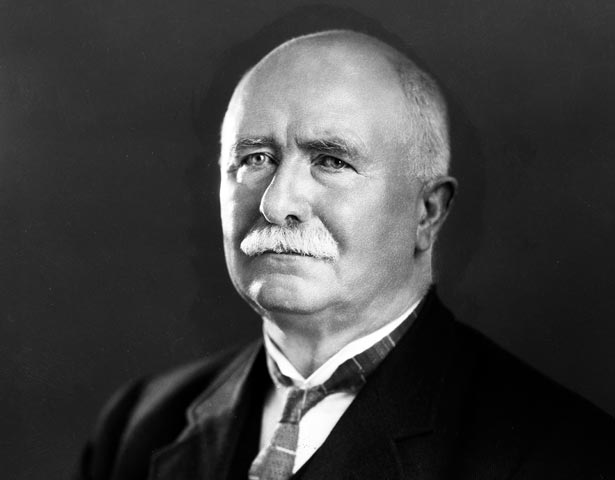
WILLIAM MASSEY
The 19th Prime Minister
of New Zealand was William Massey who was born in Limavady, Derry
in March 1856. He was a member of the Reform Party, a political force he helped
to found, when he became PM in 1912. Born into a farming Presbyterian family,
the family moved to New Zealand
in October 1862 without young William who remained in Ireland to complete his education.
He followed the family over to the far side of the world in December 1870.
He became involved in local
politics through the local school board before being elected in an 1894 by
election for the constituency of Waitemata before contesting the 1896 General
Election for the neighbouring constituency of Franklin which he represented
until his death in 1925.
After founding his reform Party in
1909, they became the largest party after the 1911 General Election but the
incumbent Liberal Party remained in power with the support of Independents. The
Liberals lost a vote of confidence in Parliament and Massey was invited to form
a new administration and officially became Prime Minister on July 12th
1912. His first years in power were a period of great industrial unrest and his
use of force to break strikes did not endear him to either his electorate or
party colleagues but like many other politicians across the world the
intervention of the First World War diverted attention from domestic matters. In
the 1914 General Election no party won enough seats to be effective as a
Government and Massey invited the leader of Liberal Party Joseph Ward to be
party of a national unity Government in time of war.
Massey signed the Versailles Peace
treaty on behalf of New
Zealand at the end of the war. With war at
an end the unity coalition fractured and in the 1919 General Election despite
the rise of the new Labour Party, Massey and his Reform Party won a majority.
He governed a troubled New
Zealand both socially and economically until
the 1922 General Election where he failed to win his majority winning just 37
of the 80 available seats but clung to power with the support of Independents.
His health deteriorated in 1924 and
he passed away in 1925.


